Everyone's dunking on vibe coders. And vibe-whatever-ers. And look — it's legit amazing what you can do with AI right now. I use AI every day. I'm not here to tell you it's bad.
But there's something hiding in plain sight that we're not talking about.
When you vibe-code that app, or vibe-review a stack of 500 resumes in 30 seconds, or vibe-generate a marketing strategy — you get this incredible feeling of accomplishment.
"Look what I just built."
"Look what I just did."
"Look how fast that was."
But you didn't actually build it. You described it. Something else built it. And if you don't understand what that something else created — how it works, what it did, what it got wrong — then you just don't know. If you just accept the results without actually reviewing it, you also just don't know.
But you feel like an expert. You got expert-looking results. But you can't evaluate whether those results are actually good.
Dunning and Kruger would like to have a chat.
That's vibe-confidence.
The Dunning-Kruger effect is the well-documented cognitive bias where people with less knowledge or competence in a problem domain dramatically overestimate their own ability. The essence is that the less you know, the less equipped you are to recognize what you don't know. (Impostor Syndrome is the mirror version of this, btw.)
AI is a Dunning-Kruger accelerator. It gives you the outputs of expertise without requiring the inputs of expertise. And that gap between what you produced and what you understand is where things go quietly, (possibly) dangerously wrong.
And here's why I think it's about to get worse.
You're Barely Paying for This
Right now, you're paying — what — $20 a month for ChatGPT? Maybe $200 for the pro version? And you're getting access to some of the most sophisticated AI models ever created. Frontier models. Aka. "the good stuff".
That price you're paying is heavily subsidized. The AI companies are burning through investor capital to develop a product that they'll eventually really actually properly charge you for. But for now, they're not exactly "pre-revenue" but they're not so worried about profitability.
Oh and there's this lil' side effect: you get hooked on their product at a fraction of what it actually costs to run. It's the oldest play in drug-dealing the tech industry: price below cost, build the habit, figure out the business model later.
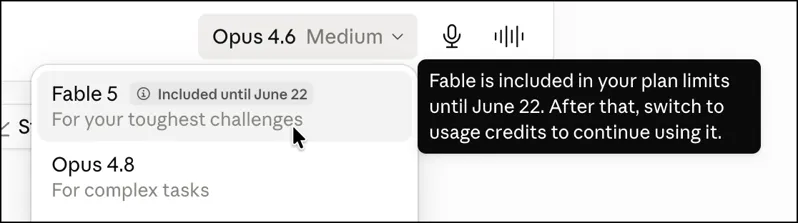
That's been the last handful of years...and it's starting to change. For example, Anthropic just introduced a new model called Fable a few days ago. It's included in my paid Claude subscription (that I use the heck out of) for the next week and a half...then it's NOT included in my subscription and I have to pay the MSRP rate. I'll have to pay "per token".
Per Token
If you've looked at the API pricing for any of these models, you've seen the word "token" a lot and it's typically in the context of "token-based billing". So what's a token? A "token" is roughly a word — sometimes a little less, sometimes a little more. Every time you ask AI to do something, you're spending tokens on the question and on the answer. The more complex the task, the more tokens, the higher the bill.
Right now, your $n.nn/month subscription is masking that pricing detail. You might have usage limits that throttle how much you can use per-hour or per-timebox but it resets pretty quickly. While you're working that way, you're using powerful models, burning through tokens, and it feels free. You don't think about efficiency because you don't have to.
But that's not going to last. That can't possibly last.
The Optimization Trap
What does everyone naturally do when something that was cheap starts getting expensive?
You optimize. You shop around. You look for the best value and you make sure you're not wasting anything.
And the AI companies know this. Tiered pricing is already here. You can pay premium rates for the most capable "frontier" models, or you can pay significantly less per token for smaller, faster, less sophisticated models. The price difference isn't small — we're talking 10x or 20x cheaper for the budget option in some cases.
So when organizations start getting real invoices for their real token usage — and they will — what do you think happens? They optimize. They route tasks to cheaper models. They set budgets. They build policies. Totally rational behavior.
Except for one thing: the results from those cheaper models won't be the same quality you got used to.
And this is where Dunning-Kruger vibe-confidence goes from a nuisance to an organizational hazard.
The Dangerous Part
When you were vibe-coding with a frontier model on your subsidized subscription, you were getting the best available output. You still couldn't evaluate it properly — that's the Dunning-Kruger part — but the output itself was relatively strong.
Now imagine the same person, with the same inability to evaluate the AI output, but using a model that's measurably less capable at 5% of the cost. The results get worse -- possibly a lot worse -- but the person's ability to notice they got worse hasn't changed.
They didn't have that ability before, and they don't have it now. The confidence stays the same. The output quality drops. And nobody in the room can tell.
That's the trap. It's not just that vibe-everything produces results you can't evaluate. It's that economic pressure is about to systematically push you toward worse results that you still can't evaluate. And you'll feel fine about it the whole time...until something goes sideways.
The Organizational Version Is Scarier
Here's where it gets really uncomfortable.
A lot of organizations are looking at AI and seeing headcount reduction. Fewer junior developers, fewer analysts, fewer people doing the "grunt work" that AI can now do faster. And I get the logic — on a spreadsheet, it makes total sense.
But those junior people aren't just doing grunt work. They're learning. They're building the judgment and institutional knowledge and absorbing all the weirdo edge cases that eventually make them the senior people who can evaluate whether work — AI-generated or otherwise — is actually good.
When you skip that development pipeline, you don't just lose capacity today. You lose your future ability to evaluate quality. You're hollowing out the very expertise that would let you catch the Dunning-Kruger problem before it compounds.
So now you've got cheaper models producing lower-quality output, being evaluated by an organization that's progressively less equipped to notice.
You know the phrase "that's not a bug, that's a feature?" Well in this case, that's not a bug, that's a doom loop.
So What Do You Do?
I'm not going to tell you to stop using AI. That would be silly. AI isn't going away, and used well, it's genuinely powerful.
But "used well" is the key phrase — and it's doing a lot of heavy lifting.
I think about this through a lens I use in my consulting work: generative versus extractive. Every decision you make with AI is amplifying one of these two modes. Generative means you're creating new capability, building understanding, developing people, creating institutional knowledge. Extractive means you're optimizing for short-term output — cutting costs, reducing headcount, moving faster without building deeper.
AI accelerates whichever mode you're already in.
If you're in a generative mode — using AI to help your people learn faster, prototype ideas, explore solutions they wouldn't have tried — AI is an incredible amplifier. Your people get better. Your organization gets smarter. The humans in the loop develop the judgment to evaluate what AI produces.
If you're in an extractive mode — using AI to replace the learning pipeline, skip the development path, optimize for speed and cost without investing in understanding — AI accelerates that too. Faster. Cheaper. And progressively more blind to its own declining quality.
The Dunning-Kruger effect means you might not be able to tell which mode you're in.
Watch out for vibe-confidence.